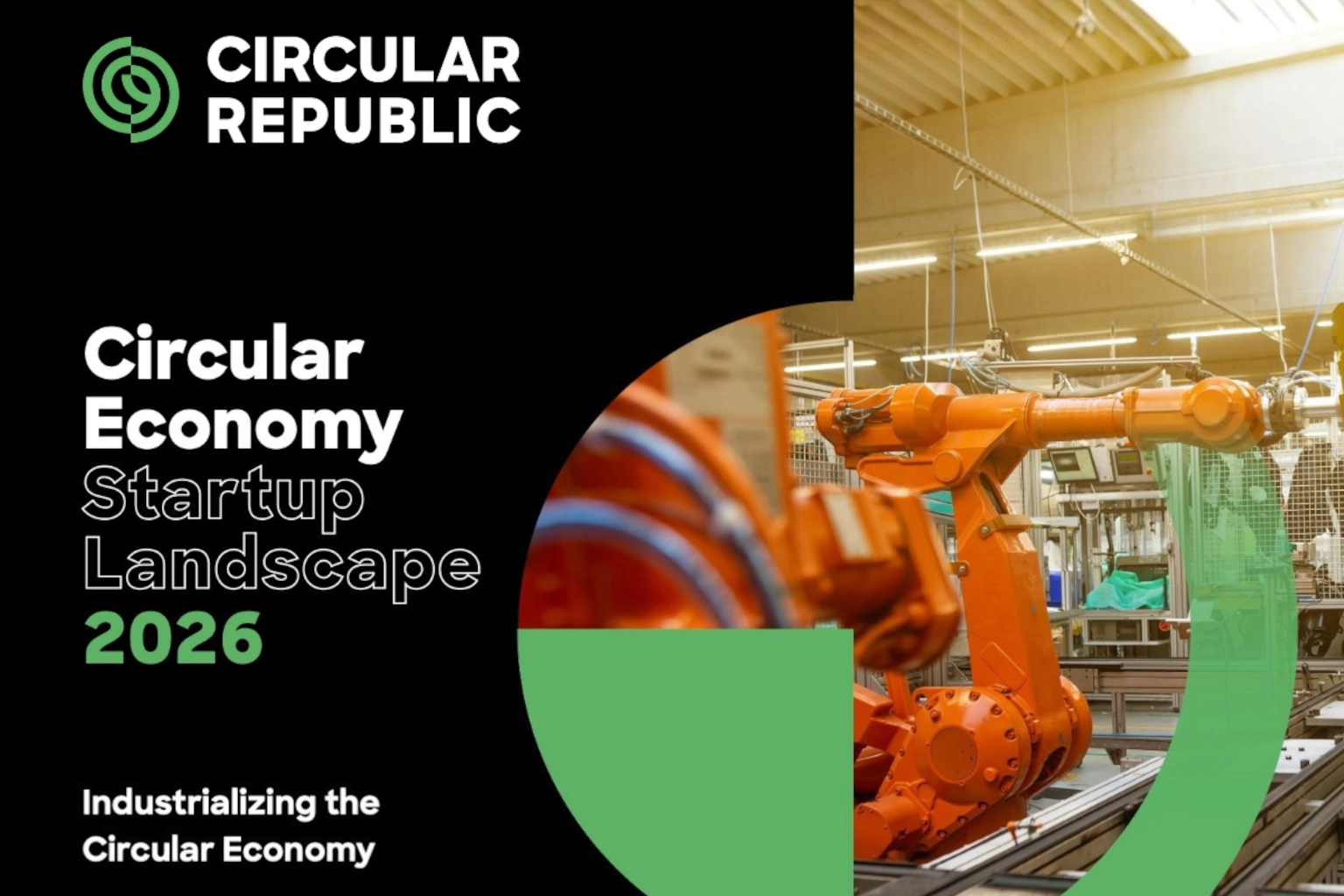
Keeping Europe's Resources in the Cycle
The circular economy is no longer a niche topic, but rather a key component of Europe’s economic resilience and technological sovereignty. The report analyzes more than 2,800 startups in Europe, including nearly 500 from Germany, and illustrates how young companies are driving transformation along the entire value chain—from bio-based materials to the recovery of critical raw materials.
The study shows progress, but it also highlights gaps, particularly in the recovery of critical raw materials. In this area in particular, collaboration among industry, startups, academia, and investors could accelerate the transition from innovative individual projects to industrial application.
Key findings from the report:
-
Focus on critical raw materials — but too few startups
Only about 15% of European circular economy startups are working to close material loops; only 5% are focused on recovering critical raw materials such as rare earths—even though these are indispensable for key technologies like electric motors and wind power. Neodymium magnets are one example: less than 1% of these are recycled, while Europe imports over 85% from China. The report identifies a need for action here to reduce dependencies and close value chains.
-
Automated disassembly and AI as game-changers
Two areas of technology are rapidly gaining importance: automated disassembly and AI-supported material recovery. Both reduce costs and increase efficiency—and could secure Europe a leading role in “Physical AI.” Particularly promising is the combination of robotics and machine learning to disassemble complex products such as electronics or batteries and recover raw materials.
-
Europe leads in investment — but implementation lags behind
More than 55% of global investment in the circular economy goes to Europe—a clear sign of confidence in the continent’s innovative strength. However, capital is heavily concentrated in bio-based materials (17% of startups) and less so in the recovery of critical raw materials. The report recommends targeted support—such as through public co-investments or long-term partnerships between industry and startups—to bridge the gap between capital and industrial scaling.
Those interested can request the new Circular Economy Landscape report and the full strategic analysis here at CIRCULAR REPUBLIC: